
Early history
Roman Britain and the Vikings
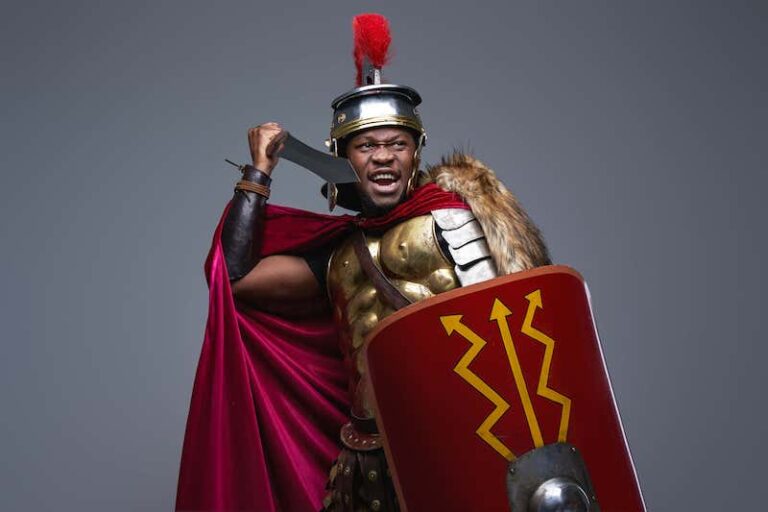
The first African fighting men that we know were present in Britain came with the Romans. Evidence of 3rd-century Black Romans has been discovered in York and London. We know that there was a unit of Moors stationed at Hadrian’s Wall, Burgh on Sands near Carlisle, and whilst Moorish is a term applied loosely to North Africans, then, like today, the people would have been a mixture of Arab and Sub-Saharan Africans. The Romans left Britain between 388 and 400 A.D
500 years later, we hear of the Blaumenn or Blmaur, which is a term coming from Old Norse meaning Black Person. The Annals of Ireland record Black Norse raiders in Ireland. These men were possibly the Slaves that the Viking Hastein bought in North Africa. These men were described as berserkers, most likely allied with the Vikings, perhaps slaves, taken from Mediterranean coastal raids of Morocco that the Norse were so famed for.
The Tudor period
Service to the Tudor Crown
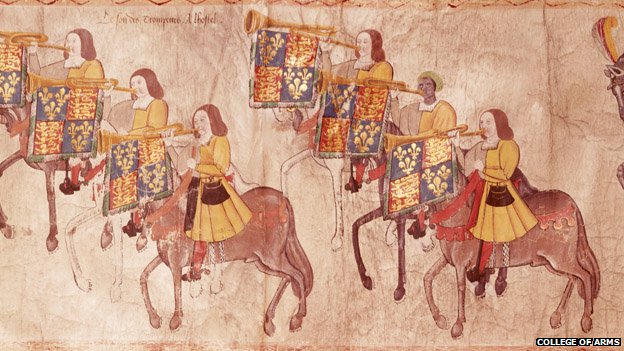
The next appearance of Black people in the Military is noted in Tudor times. King Henry The 8th, is well known to have employed John Blanke a Black Trumpeter. Miranda Kaufman’s ‘Black Tudors’ has a whole chapter devoted to the Diver, Jaques Francis, A Guinean Diver working for Italian Merchants living in Southampton. Francis is said to have dived for salvage on the Mary Rose.
Whilst these men would have found many more contemporaries in the European cities at this time, the records are there to be seen, and there were doubtless many others who didn’t make it into recorded history.
It could be argued that neither man was strictly a military figure, with Blanke having a ceremonial role and Francis operating as a freelancer. Either way, they were both performing a role for the English State /Crown.
The American War of Independence
Britain’s Black Loyalists
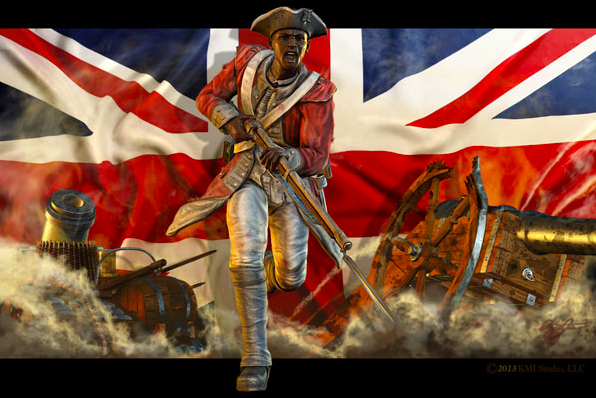
The next clear information about Blacks in the Military comes to us around the American War of Independence.
Many former Black slaves chose to fight on the side of the British in the War of Independence. It was during the War of Independence in her large and unruly colony of America that Britain gained some unlikely allies.
Black loyalists fought for Britain against the American colonists. Free black loyalists were joined by thousands of slaves who had been promised freedom and land by Britain if they joined the British. The idea of British freedom, complete freedom in the shortest possible time, was appealing to the escaped Africans who, in the 1770s, made their way to the British army positions to fight to gain legal assurance of their freedom.
1914–1918
The First World War: Walter Tull and the BWIR
The First World War saw thousands of Black men volunteer to fight for the British Empire. Walter Tull, a professional footballer, became the first Black officer to lead white British troops into battle, despite military regulations that technically forbade it. He died in 1918 and was recommended for a Military Cross that was never awarded—a symbol of the institutional barriers faced by Black soldiers. Meanwhile, the British West Indies Regiment (BWIR) contributed over 15,000 men, who often faced discrimination, lower pay, and were frequently relegated to dangerous labour roles rather than combat.
1939–1945
Black service in the Second World War
In the Second World War, the need for manpower led to a broader inclusion of Black personnel. Over 10,000 men and women from the Caribbean volunteered for the RAF, serving as pilots, navigators, and ground crew. Figures like Billy Strachan and Cy Grant became celebrated airmen. On the ground, the Caribbean Regiment served in the Middle East and Italy. Despite their vital contribution to the war effort, many returned to a Britain that subjected them to the ‘colour bar’ in housing and employment, leading to the disillusionment that fuelled the post-war civil rights movement.
Service and remembrance
Modern Service and the Legacy of Sacrifice
Today, Black personnel continue to serve in every branch of the British Armed Forces. The legacy of figures like Johnson Beharry, who was awarded the Victoria Cross in 2005 for his bravery in Iraq, continues the long tradition of Black military excellence. However, the history of the Black armed forces is also one of a struggle for historical justice—ensuring that the contributions of past generations are properly commemorated in memorials and taught in schools as a fundamental part of the British story.
Keep exploring
Related Black History Articles
Black Romans in Britain
Explore the evidence for African lives in Roman Britain.
John Blanke
Read the story of a Black trumpeter at the Tudor court.
Black Loyalists in London
Follow the stories of Black Loyalists after the American war.
More from the archive
Further research
Sources and further reading
- Bourne, S. (2014): Black Poppies: Britain’s Black Community and the Great War, The History Press.
- Sommers, M. (2002): The British West Indies Regiment, 1914-1918, Oxford University Press.
- Smith, G. (2014): When the West Indies Went to War, Ian Randle Publishers.
- Killingray, D. and Plaut, M. (2010): Fighting for Britain: African Soldiers in the Second World War, James Currey.
- Vasili, P. (2000): Walter Tull, (1888-1918), Officer, Footballer, Karia Press.