
Explore the archive
Black Tudors
Tudor England was not the racially homogenous society that later centuries imagined it to be. Parish records, court documents, royal household accounts and tournament rolls record the presence of African men and women across England during the reigns of Henry VII, Henry VIII, Mary I and Elizabeth I. Most have been forgotten. But for a remarkable few, enough documentation survives to reconstruct something of their lives — their names, their occupations, their addresses, their petitions, their baptisms and their deaths. These are the Black Tudors.
Africans in Tudor England: The Evidence
For most of the twentieth century, the conventional wisdom was that Black people arrived in Britain in significant numbers only after the Second World War. That assumption has been comprehensively dismantled by a generation of historians working with primary sources — and nowhere more thoroughly than for the Tudor period.
African people came to England in the sixteenth century through several routes. Some arrived with returning merchants and explorers who had traded or travelled along the West African coast. Some came with Portuguese traders and merchants, Portugal being the dominant European power in West African trade throughout the Tudor period. Some came via Spain, as servants or musicians in the households of diplomats and grandees. Some arrived with the Moorish ambassadors who visited the English court. And some — the evidence suggests — came under circumstances we can no longer reconstruct in detail.
The historian Miranda Kaufman, in her 2017 book Black Tudors: The Untold Story (Oneworld Publications), drew on years of archival research — parish records, Admiralty court transcripts, royal household accounts, port records and wills — to document the lives of ten Africans living in Tudor England. Her work is now the standard reference for this period, and it fundamentally changed what historians and the public could say with confidence about the racial composition of Tudor society.
Kaufman’s central argument is that Africans in Tudor England occupied a much wider range of social positions than later assumptions would suggest. They were not uniformly enslaved, uniformly marginalised, or uniformly without rights. They were musicians and divers, silk weavers and domestic servants, sailors and embroiderers. They were baptised in English churches, buried in English churchyards, and in several cases gave evidence in English courts.
This is not to romanticise their situation. Tudor England was a hierarchical, often brutal society for almost everyone at the lower end of the social scale, regardless of origin. African people in Tudor England faced a world in which their legal status was ambiguous and in which racial ideas were beginning to harden. But they were present, they were active, and they left traces.
John Blanke: The Royal Trumpeter
The most famous Black Tudor by far — and the one for whom we have the most vivid documentary evidence — is John Blanke, a trumpeter who served at the courts of Henry VII and Henry VIII.
Blanke appears in the documentary record for the first time in November 1507, when he received a payment of 8 shillings a month from the Treasurer of the Chamber of Henry VII — the same rate paid to the other royal trumpeters. He continued to be paid through the transition of Henry VII’s death and Henry VIII’s accession in 1509.
The most extraordinary document in which Blanke appears is the Westminster Tournament Roll of 1511 — a painted vellum roll, nearly sixty feet long, now held at the College of Arms in London, which records a tournament held to celebrate the birth of Henry VIII’s son (who died shortly afterwards). The roll is one of the finest examples of early Tudor illuminated art, and it includes — twice, clearly visible — a depiction of a trumpeter riding on horseback who is identifiably of African descent, wearing a turban-like head covering and distinctive clothing. He is, almost certainly, John Blanke. This makes the Westminster Tournament Roll one of the earliest known images of a Black person in English art created from life rather than fantasy.
Blanke’s most remarkable surviving document is a petition he addressed to Henry VIII, probably in 1512, requesting an increase in his wages. He had been paid 8 shillings a month — the standard rate — but he asked to be paid the full 16 shillings a month that married trumpeters received. His petition was granted. Henry VIII signed the warrant increasing Blanke’s pay. An African musician at the Tudor court petitioned his king for better pay, and received it. It is a more human and more complex story than most people expect from this period.
After 1512, Blanke disappears from the documentary record. We do not know when he died, whether he had children, or what became of him. But for a few remarkable years, the evidence allows us to see him clearly: a skilled professional musician, working at the highest levels of English court life, confident enough to petition his sovereign and successful enough to have his petition granted.
Jacques Francis: The First Black Witness in an English Court
In the summer of 1545, Henry VIII’s flagship the Mary Rose sank in the Solent during a battle with a French fleet, with the loss of several hundred men. In the years that followed, a Venetian salvage contractor named Piero Paolo Corsi attempted to recover cannon and other valuables from the wreck.
Among Corsi’s team was a man named Jacques Francis — described in the court documents as a “blacke Moore” and identified as a diver from Guinea. In 1548, Corsi’s salvage operation became the subject of an Admiralty Court case, and Jacques Francis was called as a witness. His testimony survives in the court records.
The opposing counsel attempted to have Francis’s evidence excluded on the grounds that, as an African, he was not a credible witness — implying that he was a slave or of slave status and therefore legally incompetent to give evidence. The court rejected this argument and accepted his testimony. In doing so, the Admiralty Court implicitly recognised Jacques Francis as a free person with legal standing.
Francis is therefore the first named Black person known to have given evidence in an English court of law. His testimony — about the salvage operations on the Mary Rose — is not only historically significant in itself but has the additional distinction of having been recorded and preserved in the legal record. He is a real, named individual whose words were taken seriously by an English court in 1548.
Reasonable Blackman: A Skilled London Craftsman
The Subsidy Rolls — tax records — for the parish of St Olave’s in Southwark, across the river from the City of London, record a man named Reasonable Blackman in the 1590s. He is listed as a silk weaver. The Subsidy Rolls recorded taxable residents, which means Reasonable Blackman was a settled, taxpaying resident of Tudor London with sufficient assets to be liable for taxation.
His name is striking — both the forename (unusual even in an age of virtue-names like Prudence, Honour and Grace) and the surname, which seems to be a descriptive nickname. He was a craftsman in one of London’s skilled trades, working in the textile industry that clustered in Southwark and around Spitalfields. He was a neighbour of Flemish weavers, Italian merchants and English artisans. He paid his taxes.
Almost nothing else is known about him. But his presence in the Subsidy Rolls is a reminder that the Black Tudors were not all at the extremes of society — not all royal musicians or remarkable court figures. Some were simply people who worked, paid taxes, and went about their lives in the ordinary way of the sixteenth century.
Mary Fillis of Morisco: Baptism and Faith
The parish register of St Botolph’s without Aldgate — one of the London churches that recorded its parishioners’ baptisms, marriages and burials with particular care — contains an entry for 1597 recording the baptism of Mary Fillis of Morisco, described as “a blackmore aged about twenty years.” She had been brought to England as a domestic servant and was living in the household of a London merchant. Her baptism was recorded in full — her name, her origin (“Morisco” suggesting Moorish or North African heritage), her approximate age and her employer.
The fact of her baptism is significant. The Church of England baptised her without apparent difficulty. She was received into the community of the parish. Whether she was free or bound, whether she remained in London or returned to her country of origin — these things we do not know. But the parish register recorded her name, and it has survived.
Elizabeth I’s Proclamations: A Sign of Numbers
In 1596 and again in 1601, Elizabeth I issued royal proclamations ordering the expulsion of “Negroes and blackamoors” from England. The 1596 proclamation was addressed to the Lord Mayor of London and declared that there were “of late divers blackmoores brought into this realme, of which kinde of people there are allready here to manie.”
These proclamations are historically significant in ways that cut against the grain of the usual interpretation. The most obvious point is the one that historians like Kaufman and Onyeka (author of Blackamoores: Africans in Tudor England, 2013) have emphasised: Elizabeth I would not have needed to issue a proclamation expelling a group of people if those people did not exist in large enough numbers to constitute a political problem. The proclamations are evidence of a Black population in Tudor England significant enough to attract royal attention.
They are also evidence of the beginning of a hardening racial ideology — the move from a relatively fluid attitude to African people as individuals towards a more systematic hostility. The 1601 proclamation makes explicit reference to the economic competition that Black workers allegedly presented to English workers, anticipating the racialised economic anxieties that would characterise later periods.
Both proclamations largely failed. Implementation was left to local officials who had little incentive to pursue it, and many employers had practical reasons to keep their Black servants and employees. The Black Tudors who appear in parish records after 1601 are evidence that the expulsions were not carried out systematically.
Diego: Drake’s Navigator and Companion
Among the most dramatic Black Tudor stories is that of Diego — a man of African descent who sailed with Sir Francis Drake on several voyages, including Drake’s circumnavigation of the globe (1577–1580). Diego had been enslaved by the Spanish and escaped during one of Drake’s earlier raids on Spanish ships and settlements. He joined Drake’s crew, became a trusted crew member and, according to some accounts, played a significant navigational role during the circumnavigation.
Diego’s story is documented in the accounts of Drake’s voyages written by participants, and he appears as a real and active figure — not a background presence but someone whose skills and knowledge Drake explicitly valued. He serves as a reminder that the African presence in Tudor England was not confined to domestic settings: it extended to the ships and voyages that were building England’s maritime power.
What Miranda Kaufman’s Research Tells Us
Miranda Kaufman’s Black Tudors (2017) is the book that brought these stories to a wide audience, drawing together a decade of archival research. Her methodology — tracking African individuals through parish records, court documents, household accounts and other primary sources — allowed her to reconstruct ten lives in enough detail to write about them as individuals.
Her findings challenge several entrenched assumptions:
Most Africans in Tudor England were not enslaved. English common law did not clearly recognise slavery as a legal status, and there is no evidence of an institutionalised slave system in Tudor England comparable to what would develop in the colonies. African people in Tudor England existed in a range of legal conditions — some indentured, some free, some in domestic service — but they were not generally enslaved in the sense that word would later acquire.
They occupied skilled and valued positions. Trumpeters, divers, silk weavers, embroiderers — these are not the occupations of people treated as entirely without worth or agency. Blanke’s successful pay petition is the clearest single example, but Kaufman’s other subjects show similar evidence of professional standing.
They were integrated into English religious and civic life. Baptisms, marriages and burials in English parish churches; testimony in English courts; tax records. These are the signs of people who were part of, not simply tolerated by, English civil and religious society.
Their numbers were significant enough to notice. Elizabeth I’s proclamations, the consistent presence of “blackamoors” in parish records across multiple cities and counties, the routine appearance of Africans in household accounts — these suggest a community of some size, not a handful of individuals.
Sources and Further Reading
- Kaufman, M. (2017): Black Tudors: The Untold Story, Oneworld Publications — the definitive account of ten documented African lives in Tudor England
- Onyeka (2013): Blackamoores: Africans in Tudor England, Their Presence, Status and Origins, Narrative Eye
- Fryer, P. (1984): Staying Power: The History of Black People in Britain, Pluto Press, Chapter 1
- Olusoga, D. (2016): Black and British: A Forgotten History, Macmillan, Chapter 2
- Westminster Tournament Roll (1511), College of Arms, London — contains the earliest surviving image of John Blanke
- The National Archives, HCA 13/93 — Admiralty Court records containing Jacques Francis’s testimony (1548)
- The National Archives, E 179 series — Subsidy Rolls recording Reasonable Blackman
- Parish Register of St Botolph’s without Aldgate — baptism of Mary Fillis, 1597
- Hakluyt, R. (1589): The Principal Navigations, Voyages, Traffiques and Discoveries of the English Nation — contains accounts of early English contacts with West Africa
- The National Archives (online): Tudor Black history resources
Una Marson: A Trailblazing Voice for Women’s Rights
Introduction to Una Marson and Her Significance Una Maud Victoria Marson stands as one of the most influential figures in
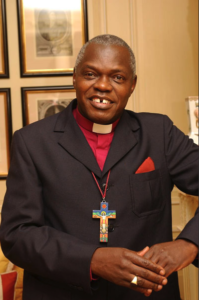
Bishop John Sentamu
Bishop John Sentamu: From Uganda to Archbishop of York Introduction to Bishop John Sentamu John Tucker Mugabi Sentamu, widely known
African American Soldiers in World War I and Their Connection to Britain
World War I and African American Soldiers World War I marked a turning point in global history, and the role
Meet the Maroons of Jamaica
Uncovering the Legacy of Nanny: Jamaica’s Fierce Maroon Leader The story of nanny of the marroons is one of the
Edward Colston: Slave Trader, Philanthropist, and the Statue That Divided Britain
Edward Colston made his fortune trading enslaved Africans and spent part of it building schools and almshouses in Bristol. For
The Royal African Company: The Crown Corporation That Enslaved 100,000 People
The Royal African Company was chartered by Charles II in 1672, with the Duke of York as its governor. It