
Explore the archive
Caribbean Migrants
Explore caribbean migrants through the stories and themes below. Use the contents to jump to a section.
Historical Context and Causes of Caribbean Migration
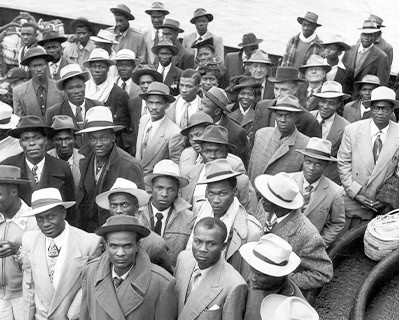
Set the scene by explaining why Caribbean migration to Britain occurred in the first place. This section should cover Britain’s colonial relationship with the Caribbean, the impact of the Second World War, and severe labour shortages in the UK. Emphasise push and pull factors such as limited economic opportunities in the Caribbean and active recruitment by British institutions. Keep this focused on context rather than outcomes to avoid repetition later.
The Arrival and Early Experiences of Caribbean Migrants
Explore the realities faced by early Caribbean migrants upon arrival. This includes expectations versus reality, initial accommodation challenges, employment barriers, and everyday racism. Highlight how many migrants arrived as British citizens yet were treated as outsiders. This paragraph works well as a human-centred bridge between policy and lived experience.
Employment, Labour and Rebuilding Post-War Britain
Focus on the economic contribution of Caribbean migrants. Cover key sectors such as transport, healthcare, manufacturing, and public services. Show how Caribbean labour helped rebuild Britain’s infrastructure and welfare systems. This theme should centre on contribution rather than struggle, creating contrast with earlier sections.
Housing, Community Formation and Social Networks
Explain how Caribbean migrants established communities in British cities. Discuss issues like housing discrimination, overcrowding, and the rise of shared accommodation. Then move into the creation of support networks, churches, social clubs, and community organisations. This theme demonstrates resilience and collective identity without repeating employment narratives.
Cultural Influence on British Society
This section should examine how Caribbean culture reshaped British life. Cover music, food, language, fashion, religion, and festivals. Emphasise long-term cultural integration rather than novelty. This is a strong opportunity to show positive, lasting influence beyond migration itself.
Race Relations, Discrimination and Legislative Change
Address systemic racism, hostility, and exclusion faced by Caribbean communities. Include tensions in housing and employment, police relations, and public attitudes. Then introduce how these experiences contributed to anti-racist organising and legislative change in Britain. Keep this focused on structural impact rather than individual events to avoid duplication.
Political Activism and Civil Rights Movements
Explore how Caribbean communities and their allies organised politically. This includes grassroots activism, community leadership, and campaigns for racial justice and equality. Position this theme as an extension of earlier discrimination rather than a repetition, focusing on agency and advocacy.
Generational Change and Identity
Discuss the experiences of British-born generations of Caribbean heritage. Cover questions of identity, belonging, education, and cultural hybridity. This theme shifts the narrative forward, showing how migration reshaped British identity itself rather than remaining a historical moment.
Long-Term Impact on Modern Britain
Summarise how Caribbean migration permanently influenced Britain’s social, cultural, and political landscape. Highlight legacy rather than detail, reinforcing how migration reshaped national identity, institutions, and multicultural Britain. This paragraph should feel reflective without repeating earlier specifics.
Why Caribbean Migration Matters in British History
Conclude with a forward-looking perspective. Emphasise why understanding Caribbean migration is essential to understanding Britain today. This section should tie history to education, representation, and national memory without restating earlier arguments.