What began as a community response to racist violence in 1959 has grown into Europe’s largest street festival. The Carnival’s history is inseparable from the history of Black Britain.
Every August Bank Holiday weekend, Notting Hill is transformed. Steel bands, mas camps, sound systems, dancers in extravagant costumes, hundreds of food stalls and two million people fill the streets of west London in what is now Europe’s largest street festival and the world’s second largest, after Rio de Janeiro’s carnival.
The Notting Hill Carnival is also one of the most politically charged regular events in the British cultural calendar — a fact that tends to be obscured by the warmth and exuberance of the event itself. The Carnival began as an act of defiance against racist violence, and it has remained a political statement throughout its history, even as it has grown into a globally recognised cultural institution.
The Origins
The story of the Carnival begins not in the streets of Notting Hill but in the community halls of Trinidad, where the annual pre-Lenten carnival was one of the most important cultural events of the year — a festival with deep roots in both European carnival traditions and the African cultural practices of enslaved people. Trinidadian immigrants in Britain carried that tradition with them.
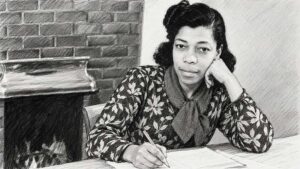
The proximate cause of the Carnival’s founding was the Notting Hill race riots of 1958. Claudia Jones, editor of the *West Indian Gazette*, recognised that the Black community needed to rebuild its solidarity and dignity after the attacks. She organised the first Caribbean Carnival in January 1959 — indoors, at St Pancras Town Hall, in the depths of winter. It was festive, political and defiant. It was also a demonstration that the West Indian community was not going to be driven out or cowed.
The Move Outdoors
The Carnival moved outdoors in the 1960s, thanks largely to the Trinidadian activist Rhaune Laslett, who organised a local community festival in Notting Hill in 1966 that was transformed when a steel band spontaneously took to the streets. What started as a small local event grew through the late 1960s and 1970s as larger numbers of Caribbean Londoners joined in, and as more of the traditional elements of Trinidad carnival — the mas (masquerade) bands, the costumes, the competitive steel band performances — were incorporated.
By the early 1970s, the Carnival was a major event drawing tens of thousands of people, and it was beginning to attract significant tension with the Metropolitan Police. The 1976 Carnival was the site of serious confrontations between police and predominantly young Black men, in scenes that prefigured the Brixton uprisings of 1981. The police response — which drew on emergency public order legislation — was controversial and scarred relations between the Black community and the Metropolitan Police for a generation.
The Carnival Today
Today, the Carnival draws up to two million visitors over two days — making it the largest annual public gathering in Europe. It is internationally celebrated as a showcase of Caribbean and Black British culture, and it has become one of London’s — and Britain’s — defining cultural events. Sound systems playing everything from soca and calypso to reggae, grime and Afrobeats line the streets alongside steel bands and mas bands from established mas camps.
The Carnival is not without its controversies: debates about noise levels, crime, gentrification and the treatment of the event by the predominantly white media regularly surface. But its core meaning — as a celebration of the vitality and resilience of Black British culture, and a testament to the community that has made Britain its home — remains undimmed.