For three weeks in August and September 1958, white mobs attacked West Indian homes and businesses in Notting Hill. The riots exposed the racism that had festered beneath Britain’s post-war social contract.
The Notting Hill race riots of 1958 did not come from nowhere. They were the eruption of tensions that had been building since the first Caribbean migrants arrived in post-war Britain — tensions rooted in housing discrimination, employment competition and the racism of both the wider society and significant parts of the political establishment.
The immediate trigger was a confrontation on 23 August 1958 between a mixed-race couple — a Swedish woman named Majbritt Morrison and her Jamaican husband Raymond Morrison — in the Latimer Road area of Notting Hill. The couple argued in the street; the argument attracted a crowd of white men who attacked Raymond Morrison. Three days later, gangs of white men — many of them “Teddy Boys” with connections to the fascist White Defence League — attacked the homes of West Indian residents in Notting Hill. The attacks continued intermittently for nearly three weeks.
The Violence
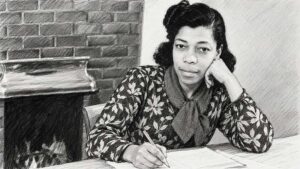
The pattern of the attacks was consistent: gangs of white men, often hundreds strong, throwing petrol bombs and milk bottles at homes known to be occupied by West Indian people, smashing windows, and attacking individuals on the streets. West Indian residents organised self-defence committees and sometimes confronted their attackers directly. Claudia Jones, whose *West Indian Gazette* covered the riots in detail, urged restraint but also solidarity.
The police response was widely criticised by the Black community as inadequate and biased. West Indian residents who defended themselves against attack were arrested alongside their attackers; in some cases, only the defenders were prosecuted. This pattern — of Black victims being criminalised while white aggressors were protected — would be repeated in the decades that followed.
Political Aftermath
The political response to the riots was deeply troubling. Rather than confronting the racism that had driven the violence, much of the political establishment — on both left and right — shifted attention to immigration, implying that the presence of West Indian people was itself the problem. The Conservative Party politician Cyril Osborne argued for immigration controls in Parliament; the Labour Party was similarly divided. The riots helped create the political conditions for the Commonwealth Immigrants Act of 1962, which began the long process of restricting Caribbean people’s right of entry to Britain.
The nine white men convicted of attacking West Indian residents received sentences that the judge explicitly condemned as inadequate — four years each — but which were nonetheless more severe than had been expected. The sentences prompted outrage from organisations representing the white defendants.
From Carnival
Claudia Jones’s response to the riots was characteristically creative and political. Recognising that community solidarity was the best protection against racist violence, she organised an indoor Caribbean carnival at St Pancras Town Hall in January 1959. It was the first Caribbean carnival in Britain: a celebration of West Indian culture, food, music and identity that was also an act of defiance.
That indoor carnival was the seed of the Notting Hill Carnival, which moved outdoors in the 1960s and grew into what it is today: Europe’s largest street festival and one of the most important cultural events in the British calendar. Every year, the Carnival is both a celebration and a reminder of the community’s resilience.