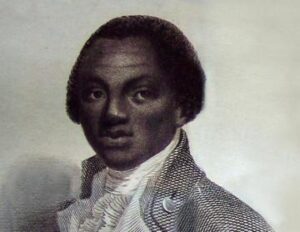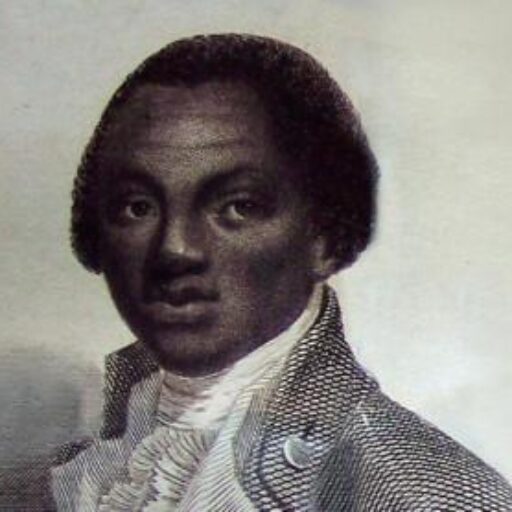
Olaudah Equiano stands as a seminal figure in the annals of Black history, his life epitomising the harrowing journey from enslavement to freedom and activism. Through his eloquent writings and relentless advocacy, Equiano illuminated the brutal realities of the transatlantic slave trade, galvanising the abolitionist movement in Britain and beyond.
Early Life and Enslavement
Born circa 1745 in the Igbo village of Essaka, in what is now southern Nigeria, Equiano was the youngest son in a family of seven children. His father held the esteemed position of a local elder, and their household included enslaved individuals—a testament to the complex social structures of the time. At the tender age of eleven, Equiano and his sister were abducted by African slave traders, setting in motion a life-altering odyssey.
Following their capture, the siblings were separated, and Equiano was sold multiple times within Africa before being transported to the coast. There, he was loaded onto a slave ship bound for the Americas, enduring the infamous Middle Passage—a voyage marked by unimaginable suffering and mortality.
Life as a Slave
Upon arrival in the West Indies, Equiano was sold to a Virginia plantation owner. Shortly thereafter, he was purchased by Lieutenant Michael Henry Pascal of the Royal Navy, who renamed him Gustavus Vassa—a moniker he would use for much of his life. Serving as Pascal’s personal servant, Equiano accompanied him on various naval expeditions during the Seven Years’ War, gaining exposure to different cultures and experiences that would later inform his worldview.
Despite the relative privileges of serving a naval officer, Equiano was not spared the indignities and brutalities inherent in slavery. He was later sold to a Philadelphia merchant, Robert King, under whose ownership he was allowed to engage in trade and accumulate savings. Demonstrating astute business acumen, Equiano eventually purchased his freedom in 1766 for forty pounds—a monumental achievement that marked the beginning of his life as a free man.
Education and Formative Experiences
Equiano’s time with Pascal and subsequent masters afforded him opportunities to learn reading and writing—skills that were rare among enslaved Africans. His baptism in 1759 further integrated him into British society, providing a platform to voice the injustices he had endured.
As a free man, Equiano traversed the globe, participating in expeditions to the Arctic and Central America. These voyages not only broadened his horizons but also deepened his understanding of the pervasive nature of slavery, fueling his determination to advocate for its abolition.
The Interesting Narrative and Abolitionist Advocacy
In 1789, Equiano published his autobiography, “The Interesting Narrative of the Life of Olaudah Equiano, or Gustavus Vassa, the African.” This seminal work provided a first-hand account of the atrocities of slavery, from capture to emancipation. Its vivid portrayal of the inhumanity of the slave trade resonated with readers, challenging prevailing prejudices and garnering support for the abolitionist cause.
Equiano’s narrative was not merely a personal memoir but a strategic tool in the fight against slavery. By detailing his experiences, he humanised the plight of enslaved Africans, making it impossible for the British public to ignore the moral imperative for abolition. The book’s success was instrumental in shifting public opinion, contributing to the eventual passage of the Abolition of the Slave Trade Act in 1807.
Beliefs and Arguments Against Slavery
Equiano’s writings articulated a compelling moral and economic case against slavery. He argued that the institution was not only a profound moral failing but also economically inefficient. By highlighting the potential for legitimate trade between Britain and Africa, he posited that abolition could lead to mutually beneficial economic relationships, free from the taint of human exploitation.
His Christian faith also underpinned his abolitionist stance. Equiano drew parallels between the teachings of Christianity and the inherent rights of all humans to freedom and dignity, challenging the hypocrisy of a society that professed religious piety while perpetuating slavery.
Travels and Activism
Beyond his literary contributions, Equiano was an active participant in the abolitionist movement. Residing in London, he joined the “Sons of Africa,” a group of African abolitionists who campaigned tirelessly against the slave trade. Through lectures, pamphlets, and direct appeals to political leaders, Equiano and his peers sought to influence legislation and public sentiment.
Equiano also played a role in the Sierra Leone resettlement project, which aimed to provide a haven for freed slaves. His involvement in this initiative demonstrated his commitment to creating tangible solutions for those liberated from bondage, although the project faced numerous challenges and controversies.
Legacy
Olaudah Equiano’s life and work left an indelible mark on the abolitionist movement and the broader fight for human rights. His narrative provided a foundation for future generations of Black writers and activists, illustrating the power of personal testimony in effecting social change.
Today, Equiano is remembered as a pioneer who transformed his suffering into a catalyst for liberation. His story continues to inspire movements for justice and equality, underscoring the enduring impact of his contributions to history.
Frequently Asked Questions
1. Who was Olaudah Equiano and what role did he play in the abolitionist movement?
Olaudah Equiano was a former enslaved African who became a prominent abolitionist in 18th-century Britain. Through his autobiography, he provided a first-hand account of the horrors of slavery, influencing public opinion and bolstering the abolitionist cause.
2. How did Equiano's "Interesting Narrative" contribute to the fight against slavery?
Published in 1789, Equiano’s “The Interesting Narrative” offered a vivid portrayal of the inhumanity of the slave trade. Its widespread readership helped to humanise enslaved Africans, challenging societal prejudices and galvanising support for abolition.
3. What motivated Equiano to become involved with the Sons of Africa?
Having experienced the brutality of slavery firsthand, Equiano was driven by a profound commitment to human rights. Joining the Sons of Africa allowed him to collaborate with fellow African abolitionists in campaigning against the slave trade through lectures, writings, and political advocacy.